
Views: 0 Author: Site Editor Publish Time: 2025-12-03 Origin: Site


Cut-resistant gloves are essential personal protective equipment (PPE) designed to shield your hands from sharp tools and materials. Whether you're working in food processing, construction, or manufacturing, these gloves offer crucial protection against cuts and abrasions. In this post, we'll explore how cut-resistant gloves work, the materials they’re made from, and the industries that rely on them for safety.
Cut-resistant gloves are designed to minimize the risk of injury caused by sharp objects, such as knives, glass, metal, or machinery. These gloves provide protection by using advanced materials and engineered designs to withstand blade penetration. It's important to note that these gloves are not "cut-proof" — they can only resist cutting up to a certain point. For example, while they can prevent injuries from minor cuts and abrasions, they cannot fully stop all blade penetration, especially under high force or industrial conditions.
Cut-resistant gloves are rated based on industry standards such as ANSI/ISEA 105 (in the U.S.) and EN388 (in Europe). These standards define the glove's cut resistance level, which indicates the amount of force the glove can resist before being penetrated by a sharp object. These ratings are crucial for selecting the right gloves for various tasks, as not all gloves offer the same level of protection.
Cut-resistant gloves are commonly used in industries where workers handle sharp objects and materials. Some of the key industries that rely on these gloves include:
● Food Processing: Gloves are used to protect workers when slicing, dicing, or cutting food items. FDA-approved gloves are often required in this industry for both safety and hygiene purposes.
● Metal Handling: Workers handling sharp metal sheets or pieces use cut-resistant gloves to avoid injuries from cuts, especially in environments with high volumes of sharp-edged materials.
● Glasswork: Cut-resistant gloves are used in glass manufacturing and handling, where sharp edges and the risk of lacerations are high.
● Construction and Automotive: In construction, workers handling tools or materials like nails and metal rods often wear cut-resistant gloves to prevent accidents. The same goes for automotive repair where sharp tools and parts are frequently handled.
These gloves ensure safety in environments where cutting risks are high and provide workers with the protection they need to perform tasks efficiently and safely.
The effectiveness of cut-resistant gloves is determined by the standards set by organizations like ANSI/ISEA and EN388. These standards measure and rate the gloves' resistance to cutting forces:
● ANSI/ISEA 105: In the U.S., this standard categorizes gloves from A1 to A9, with A1 offering the least protection (200g cut force) and A9 providing the highest protection (6,000g cut force).
● EN388: In Europe, gloves are rated using a four-digit code. The first digit indicates cut resistance on a scale from 1 to 5, where 5 is the highest resistance. The EN388 standard provides a clear way to compare glove performance across different brands and types.
High-Performance Polyethylene (HPPE) is one of the most common materials used in cut-resistant gloves due to its exceptional strength and lightweight properties. HPPE fibers are incredibly strong, being 5 to 15 times stronger than steel by weight, allowing gloves made from it to offer high levels of protection without compromising dexterity. When a blade comes into contact with HPPE, the fibers stretch and interlock, dissipating the force of the blade and preventing penetration. This design ensures that the gloves can handle light to moderate cuts, making them ideal for general use in industries like food processing and light manufacturing.
Stainless steel mesh gloves provide a physical barrier that offers unparalleled protection against sharp objects. The gloves are made by interlinking stainless steel rings or wires, creating a rigid surface that resists blade penetration. This makes stainless steel mesh gloves ideal for extreme tasks, such as butchering or handling glass and metal. The mesh distributes the force across its surface, reducing the risk of serious lacerations in high-risk tasks.
Recycled yarn blends are becoming increasingly popular due to their environmental benefits without sacrificing performance. These blends often include recycled HPPE, polyester, or cotton fibers, providing similar cut resistance to pure HPPE. By incorporating recycled materials, these gloves contribute to reducing waste and supporting sustainability. The recycled blends are woven to offer excellent protection, while also being more affordable and eco-friendly.
Tip: These core materials each play a significant role in ensuring that cut-resistant gloves meet the specific needs of various industries while providing reliable protection.
Cut-resistant gloves use advanced materials like HPPE and Kevlar to absorb and redirect blade force. These fibers are designed to interlock when they come in contact with a sharp object, creating a barrier that resists penetration. For example, when a blade strikes HPPE, the fibers stretch and lock together, effectively dissipating the force of the blade. This action reduces the likelihood of the blade cutting through the glove, ensuring that workers stay protected from minor to moderate cuts. Kevlar works similarly but offers additional heat resistance, making it ideal for environments exposed to high temperatures.
This mechanism of fiber interlocking is crucial in gloves used in everyday tasks, such as food processing, metal handling, and glasswork, where sharp objects are common but the risk of extreme force is low.
Stainless steel mesh and thick aramid layers provide a physical barrier to extreme cutting threats. The mesh works by using interconnected rings of stainless steel, which form a rigid structure that blades cannot penetrate easily. These gloves are typically used in high-risk environments, like butchering, metal fabrication, and handling sharp-edged glass. The stainless steel rings distribute the force from a blade across a wider area, reducing the likelihood of injury.
Thicker aramid layers, found in gloves made from materials like Kevlar, also act as a rigid barrier. These materials are extremely durable, preventing cuts and abrasions in environments where sharp objects or extreme heat are present. Gloves featuring these materials are often used for welding, glass manufacturing, and other tasks that demand both high cut resistance and heat protection.
In addition to the base materials, coatings like PU (polyurethane), nitrile, and neoprene further enhance the protection and performance of cut-resistant gloves. These coatings are applied to the outer layer of the gloves to improve grip and resistance in various conditions. PU coatings, for instance, enhance dexterity by providing a thin, flexible layer that allows for precise handling, especially in dry conditions. Nitrile coatings offer improved grip in wet or oily environments, making them ideal for jobs in food processing, automotive, and heavy industries.
Neoprene coatings provide additional heat and chemical resistance, making gloves suitable for high-temperature tasks like welding. These coatings act as an extra layer of protection, preventing the gloves from slipping or tearing while also adding an additional defense against sharp objects.
Mechanism | Function | Materials Used | Use Case Example |
Fiber Locking | Absorbs and redirects blade force | HPPE, Kevlar | Food processing, light industry |
Physical Barrier | Prevents blade penetration with rigid material | Stainless steel mesh, aramid | Butchering, glass handling |
Coating Enhancement | Improves grip and adds protection in specific environments | PU, nitrile, neoprene | Automotive, welding, food handling |
By using these mechanisms together, cut-resistant gloves can provide the necessary protection without sacrificing comfort or dexterity.
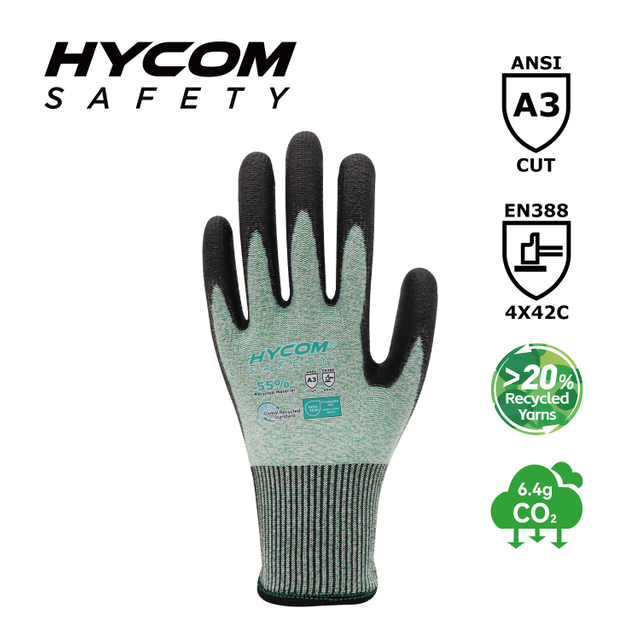
Several leading brands have incorporated unique design features to improve the performance and comfort of cut-resistant gloves. HYCOM, for instance, has introduced thumb reinforcements to strengthen the high-wear areas of the gloves. This innovation is particularly useful for workers who frequently use their hands in tasks requiring precision, like cutting and slicing. HYCOM also offers biodegradable materials, providing an eco-friendly option without sacrificing durability or protection.
3M has focused on enhancing the functionality of cut-resistant gloves by adding touchscreen compatibility. This allows workers in industries like construction or food processing to use their mobile devices or tablets without removing their gloves. This design feature increases productivity and convenience, especially in environments where safety is a priority.
NoCry has taken a different approach by using stretchy spandex in their gloves. This material ensures a snug fit, offering users enhanced comfort and reducing the likelihood of glove movement during tasks. It’s particularly beneficial for jobs that require dexterity and flexibility, such as kitchen preparation or small-scale manufacturing.
In addition to design innovations, advanced weaving techniques have significantly improved the performance of cut-resistant gloves. Fine weaving allows for a denser and tighter arrangement of fibers, which increases cut resistance while maintaining flexibility. This means gloves can be made thinner and lighter without compromising on safety, offering better dexterity for tasks requiring precision.
Several manufacturers have adopted advanced weaving techniques to optimize both comfort and protection. Case studies show that gloves with finer weaves provide higher cut resistance ratings without sacrificing user mobility. For example, gloves with an 18-gauge (18G) weave, like those from HYCOM, achieve a high level of protection (ANSI A5) while remaining flexible enough for tasks like food preparation or small assembly work.
Weave Type | Cut Resistance Rating | Flexibility Impact | Use Case Example |
18G Weave | ANSI A5 | High flexibility | Food processing, light industrial work |
13G Weave | ANSI A4 | Moderate flexibility | Construction, automotive repair |
7G Weave | ANSI A2 | Lower flexibility | Extreme cutting tasks (butchering) |
A common misconception is that cut-resistant gloves are completely cut-proof, meaning they can fully protect against all types of blade penetration. However, no glove can guarantee absolute protection against extreme force. Instead, cut-resistant gloves are rated based on their ability to withstand a specific level of force, as defined by standards like ANSI/ISEA 105 and EN388. For example, gloves rated ANSI A9 can resist up to 6,000g of cut force, but they still have their limits when exposed to very sharp or high-pressure blades. Understanding these ratings helps users choose the right gloves based on the type of tasks they face.
Many assume that thicker gloves offer more protection. However, the thickness of the glove doesn't necessarily correlate with better cut resistance. In fact, advanced weaving techniques, such as using finer yarns in tighter weaves, can provide higher cut resistance while maintaining a thinner, more flexible glove. These gloves offer the same or better protection as thicker models but with enhanced comfort and dexterity. For example, gloves made with an 18-gauge weave can offer high protection (ANSI A5) while remaining thin and flexible enough for detailed work, like food preparation or small assembly tasks. Thicker gloves may not always offer the best combination of protection and comfort.
Another myth is that cut-resistant gloves are uncomfortable to wear for long periods, due to their stiffness or thickness. However, modern cut-resistant gloves are designed to address comfort concerns. Many are made with breathable fabrics and moisture-wicking fibers that help keep hands dry and comfortable during extended wear. Additionally, brands have incorporated stretchy materials like spandex, allowing for a snug fit that moves with the hand. These innovations ensure that gloves are both protective and comfortable, even in high-intensity environments. Gloves from brands like NoCry, which use stretchy spandex blends, are a good example of cut-resistant gloves that balance comfort with performance.
Here’s a table summarizing these myths and facts:
Myth | Fact | Example/Explanation |
Cut-resistant gloves are cut-proof | No glove is fully cut-proof; they resist, but don’t eliminate risk. | Gloves are rated by resistance levels (e.g., ANSI A9 for high protection). |
Thicker gloves offer better protection | Thinner gloves with advanced weaving techniques can provide equal or better protection. | 18G weave gloves offer high protection without the bulk. |
Cut-resistant gloves are uncomfortable | Modern designs use breathable materials and stretchy fibers for comfort. | NoCry gloves use spandex for a snug, comfortable fit. |
Selecting the right cut-resistant gloves is crucial for safety. Consider your specific use case and material needs to ensure optimal protection. It's important to balance protection, comfort, and flexibility, especially in different work environments. Companies like Hycom offer high-quality gloves designed to meet these needs, providing both performance and comfort. Choose gloves based on industry standards and your personal safety requirements.
A: A cut-resistant glove is designed to protect hands from sharp objects. It is made from strong materials like HPPE or Kevlar, which help prevent cuts and abrasions during tasks involving knives, glass, or metal.
A: Cut-resistant gloves work by using fibers that interlock when a blade contacts them, dissipating the force of the cut. This mechanism helps prevent the blade from penetrating the glove, keeping hands safe.
A: No, cut-resistant gloves are not cut-proof. They are rated to resist specific levels of cutting force, but extreme pressure can still penetrate, depending on the material and rating of the glove.
A: A cut-resistant glove provides essential protection in industries like food processing, construction, and manufacturing, reducing the risk of injury from sharp tools and materials.
A: Select a cut-resistant glove based on your task requirements and industry standards. Consider materials, flexibility, and cut-resistance ratings like ANSI or EN388 to find the best fit.
